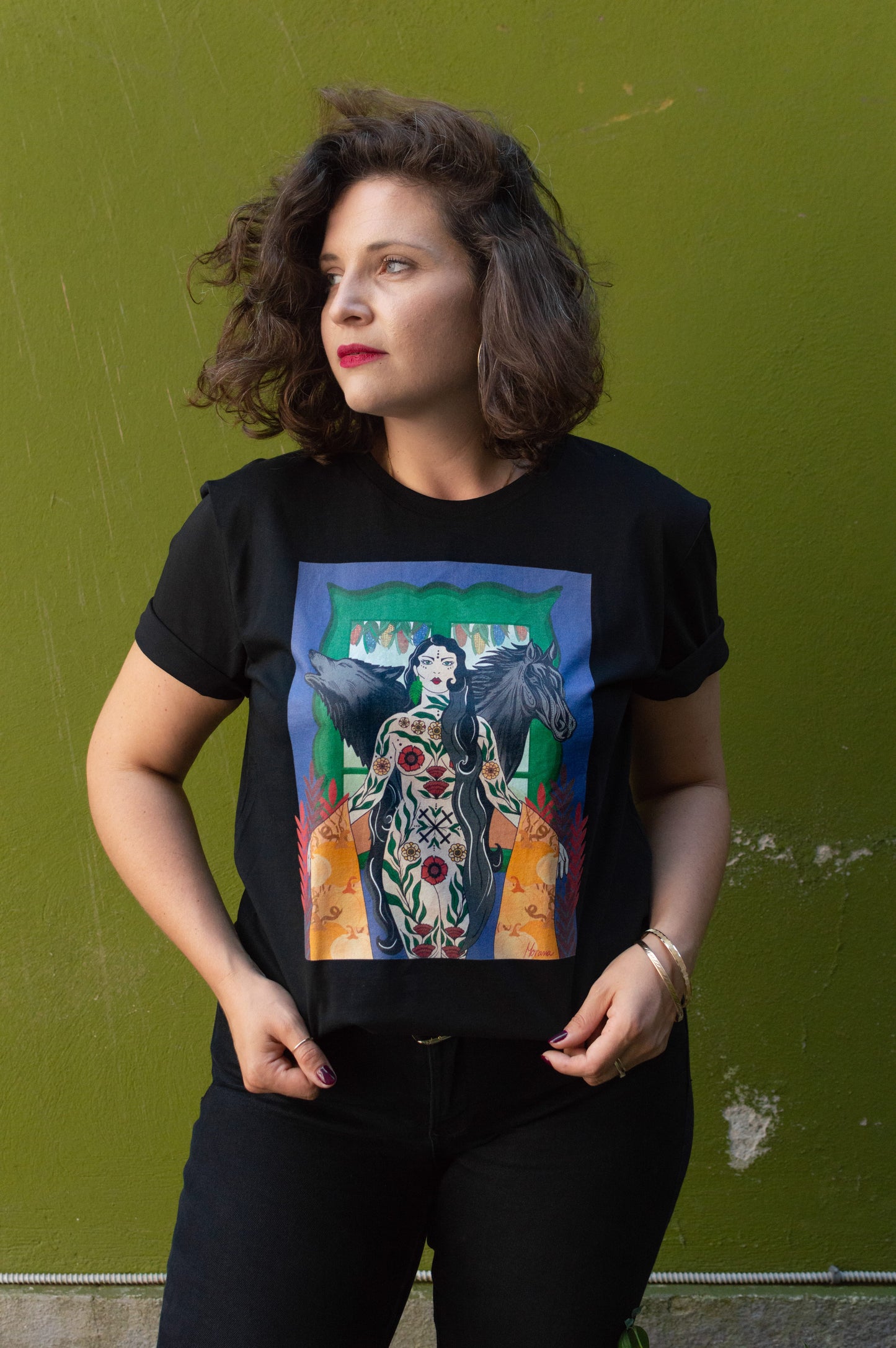
Morana: Goddess of Winter
"Kimavec" – the time when fruit on the trees nods (kima). On the 23rd of the month, we celebrate the autumnal equinox, saying goodbye to the fertility of the earth and welcoming the arrival of autumn. The equinox also marks the second harvest festival. On this occasion, houses were decorated with dried stalks and colorful corn cobs, while pumpkins and dry bundles of grain served as decoration.
September is a month of transition ruled by the goddess Morana. She is the Slavic goddess of winter and death, also associated with water. She is Mara, who transforms into Morana in the autumn, representing the dominance of feminine energy during this time. However, she should not be understood as an evil goddess, as everything in the world must die before it can be born again. Our Slavic ancestors followed nature and accepted it as it is – they did not divide it into good and evil. Every year, Morana leads the earth into a deep sleep so that it may rest and be fertile again in the spring.
In Slovenian folklore, not much has been preserved about the goddess herself, but she can be recognized in the mythological creature called "Mora." According to folk belief, Mora presses upon people at night and harms animals. She was imagined as a tall woman in white who can change her form at will, most often into a horse or a werewolf.
Mora – trutamora (nightmare's paw) is also a sign with six petals carved into house doors and cradles to ward off this mythological creature. For this purpose, pentagrams and other symbols were also carved.
We already met the goddess Mara or Morana in the mythological story in the month of June (Rožnik), where the wedding between Jarilo and Mara takes place. But because Jarilo betrays his wife, she becomes Morana and takes her revenge.